
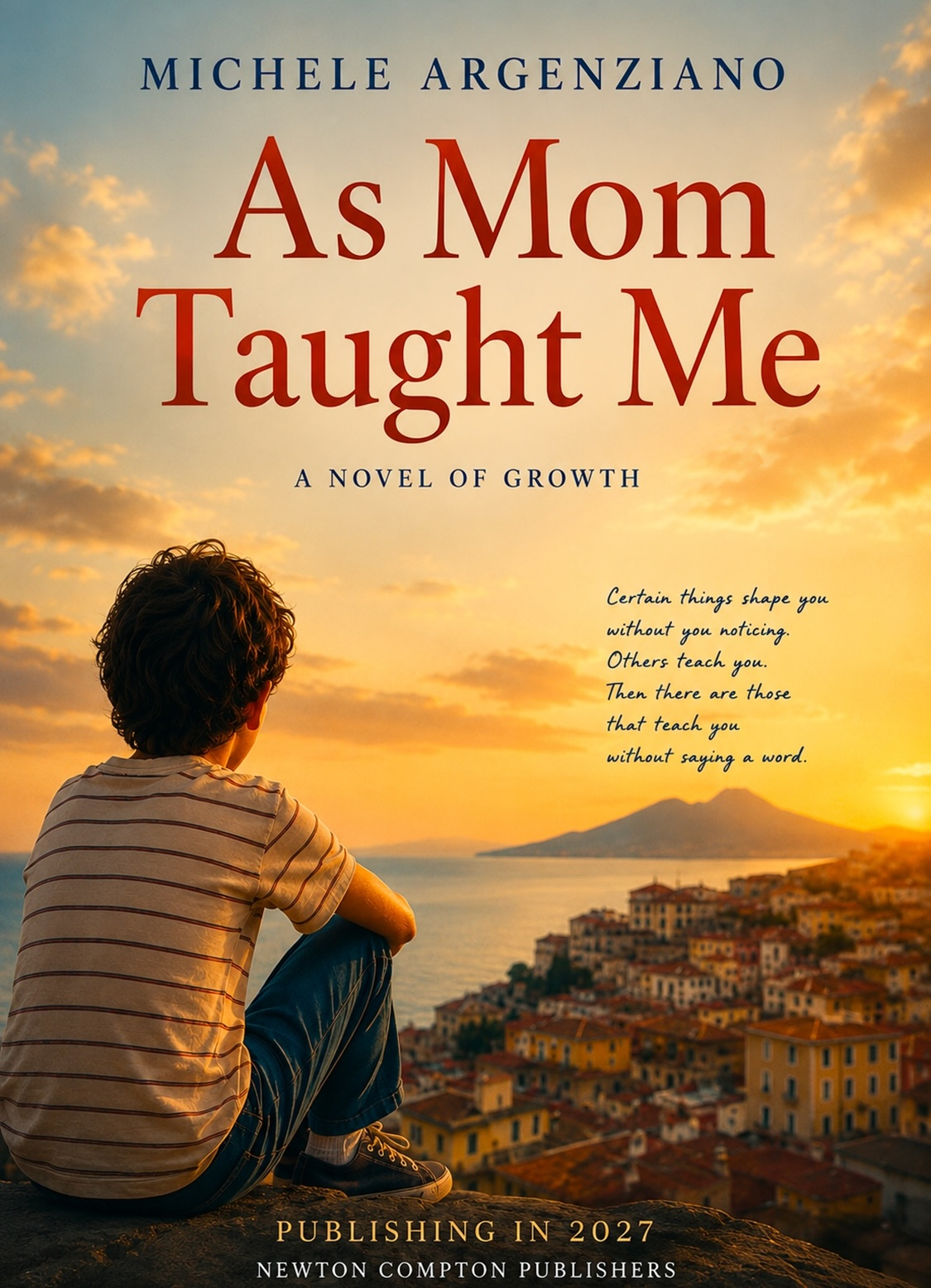
As Mom Taught Me is a semi-autobiographical novel that tells the story of a child and his stage of growth, until he undergoes a process of premature adultification caused by events, educational or social tendencies and expectations that will shape his life and development, and through which he will learn to confront his most authentic reality; during early adulthood, the protagonist will also discover that he has an illness that has characterised and will continue to characterise every aspect of his being, for which he had been unable to identify a precise reason or cause, except at times by blaming the rigidity of a strict and rigorous father, foolish beliefs in fate and misfortune, or the inner conflict of living an unfair life.
The people he meets throughout the novel, his disappointments, dissatisfaction and constant ambition and desire to grow professionally will continually be connected to profound reflections, beginning with the principle and understanding that each of us has a personal view of things, that the concept of “normality” is subjective and, above all, that we must not always blame others for the faults and shortcomings of everyday life.
Through complex professional experiences, passions cultivated with determination and moments of profound introspection, the protagonist discovers that true growth does not consist in appearing different from what one is, but in accepting oneself fully. Every mistake, every choice and every encounter help build a new awareness capable of transforming fragilities into strengths.
The work will also address a particularly complex theme for the writer: abandonment.
Why is it difficult for him? Why is he unable to accept easily that a person is no longer part of his life and/or never intended to be? It is complicated, not so much because of selfish aspects or the genuine affection felt for the other person, but because of his own contradiction: he, who has always favoured the concept of “freedom”, who has always encouraged everyone in his life to begin again when tired or pushed to the limit, who has always embraced Vasco Rossi’s song I soliti, which says “we are free to fly, to make mistakes, to dream, not to return”, how can he instead, first and foremost, become so attached to someone or something without embracing the lesson he gives to others?
In the background of the narrative, the bond with the maternal figure will constantly emerge, symbolising origins, unconditional affection and the most sincere part of the human being. It is precisely from this bond that the novel’s title takes shape: an invitation to recognise oneself without masks, without artifice and without compromise.
With a direct and engaging style, As Mom Taught Me will accompany the reader on a journey of personal growth through universal themes such as identity, redemption, ambition, love, solitude and the search for oneself. A story that demonstrates how the greatest courage does not lie in becoming someone different, but in having the strength to show oneself to the world exactly as one is: as mom made us.